Overview
Served as Creative Technologist, Facilitator, and Researcher across the Digital Resilience Network — a Ford Foundation initiative connecting civil society organizations across the Global South. Consultancy was concentrated in the Tech Lab workstream, where the work centered on trust building, capacity development, and skill sharing across a network of organizations operating in high-stakes digital environments. This meant facilitating co-creation processes, conducting organizational assessments, and supporting the development of community-driven outputs that could be owned and adapted locally — rather than delivered from outside.
- Website: digitalresilience.network
- Client: Ford Foundation
- Team: Criti.ca
- Role: Creative Technologist, Facilitator, Researcher
- Year: 2024 – 2026
Context
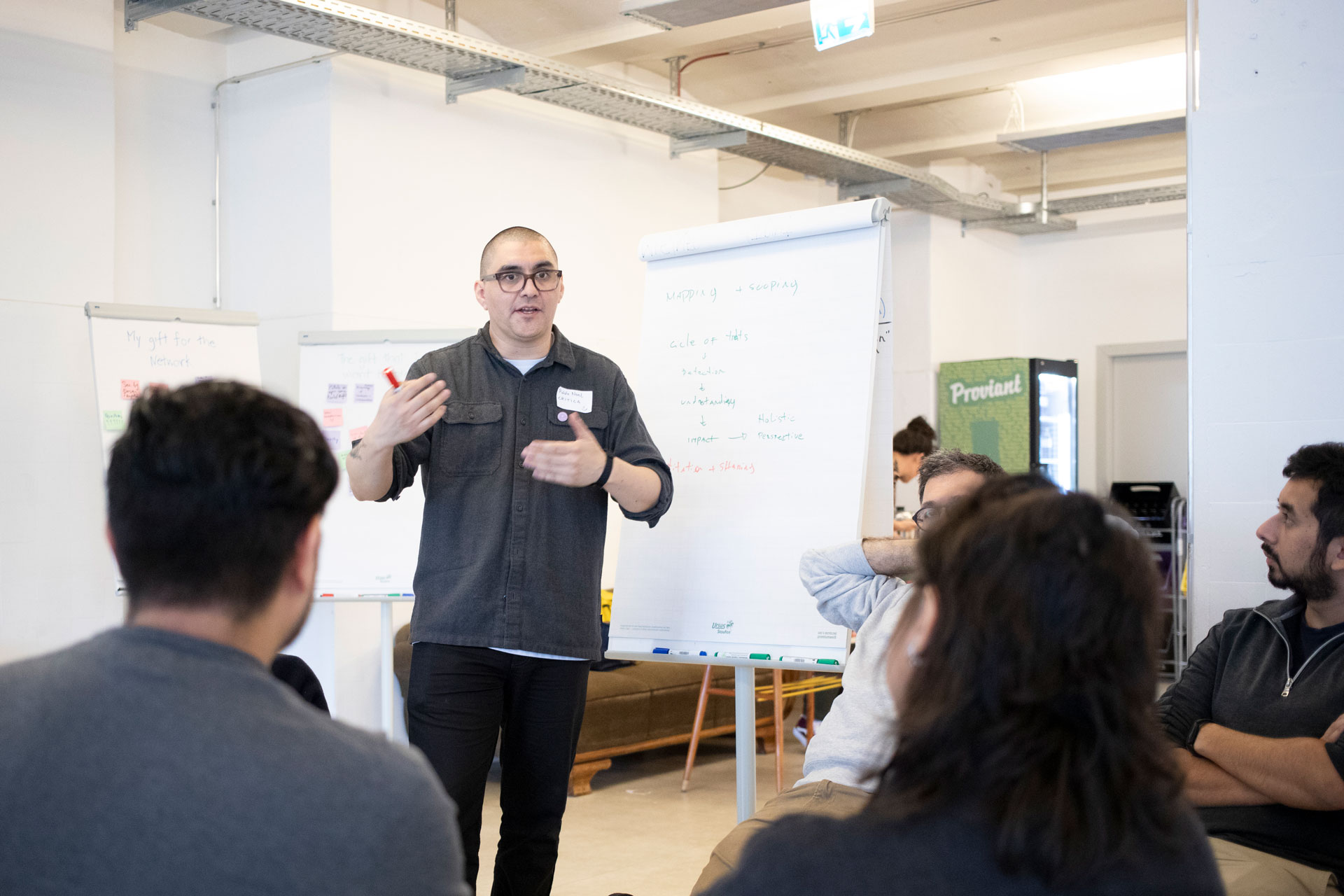
The Digital Resilience Network brings together civil society organizations across Lebanon, Kenya, Nigeria, Brazil, Chile, Mexico, and Costa Rica — each working in environments where digital threats are active and often deliberately targeted at social justice movements. The network's model is South-to-South: skill sharing and peer learning across regions, rather than expertise flowing in from the outside. The Tech Lab is where that model becomes most concrete — a space for cross-regional collaboration on threat intelligence, digital forensics, and risk assessment, built on the premise that the knowledge needed already exists within the network.
Problem
In high-risk environments, trust between organizations isn't a given — it's built slowly, through consistent presence and demonstrated care for local context. Technical capacity can't be transferred without it, and outputs that don't emerge from the community's own priorities won't be adopted regardless of how well-designed they are. The challenge was not to deliver solutions to a network of organizations, but to create the conditions under which the network could develop and own solutions itself — across languages, legal contexts, threat landscapes, and very different levels of organizational maturity.
Process
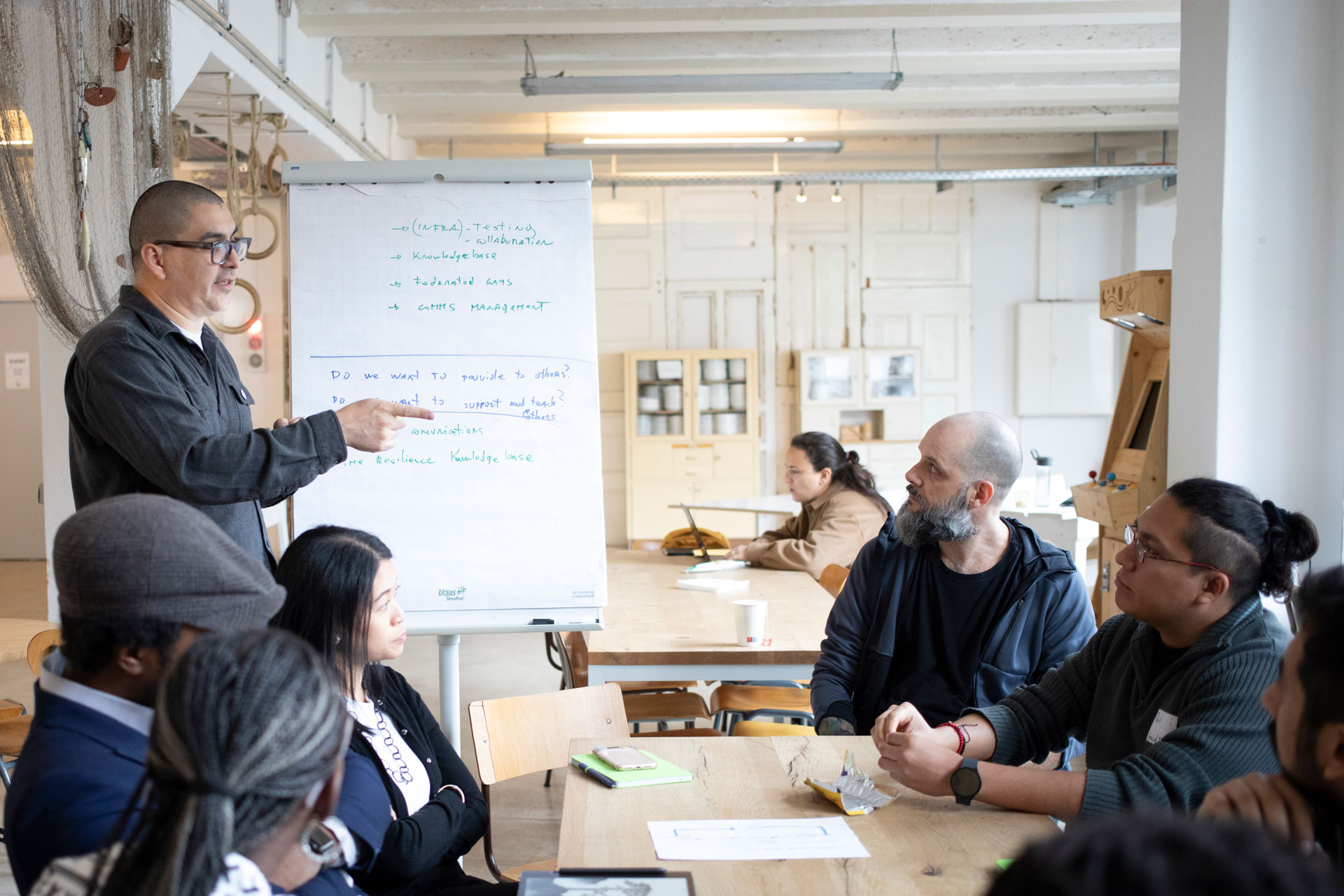
Trust building came first — and it shaped the approach to everything else. Organizational assessments were designed to be non-extractive: the goal was not to audit and report out, but to understand each organization's actual context well enough to be useful to them, and to identify where shared capacity could be developed across the network. That required sustained engagement, not one-time interviews.
Co-creation and facilitation sessions brought organizations across regions into dialogue, surfacing challenges that each had been navigating in isolation and finding the shared priorities that could become collective workstreams. In the Tech Lab, that process produced three areas of focus: a tiered structure for threat intelligence sharing across secure channels, methodologies for mobile forensics and evidence collection that members could apply and adapt locally, and a risk assessment framework grounded in regional threat data rather than generic global models. These weren't delivered outputs — they were developed by the network, for the network.
Skill Sharing
A consistent part of the role was creating conditions for knowledge to move laterally across the network — from organizations with established expertise in one area to those building capacity in that same area. That meant structuring sessions for genuine exchange rather than presentation, documenting what the network already knew in forms it could reuse, and bridging the gap between frontline experience and the frameworks, roadmaps, and project documents that made that knowledge legible to funders and technical partners.
Collaboration
Embedded within Criti.ca, the managing partner of DRN, the work required close coordination with member organizations who were peers in the process — not recipients of it. The South-to-South model meant skill sharing flowed in multiple directions: what one organization had developed in response to a regional threat became a resource for another facing something similar elsewhere. The facilitation role was as much about creating conditions for that exchange as anything else.
Outcome
Shared frameworks and roadmaps across the Tech Lab workstreams — moving threat intelligence, forensics, and risk assessment from siloed individual practices toward collective, cross-regional capacity. The outputs were community-driven: developed through the network's own knowledge and priorities, shaped by facilitation rather than handed down. Member organizations came away with a clearer picture of their own posture, a common vocabulary for discussing risk, and the beginnings of a shared infrastructure for ongoing skill sharing.
Reflection
The hardest constraint in this kind of work is time — trust can't be compressed. The depth of co-creation that produces genuinely community-driven outputs requires sustained presence and repeated engagement, which sits in tension with the timelines most funding structures expect. The other persistent challenge is the generic-versus-specific problem: frameworks that travel across regions tend to lose the local specificity that makes them useful; frameworks built for one context often won't survive transplanting. That tension never fully resolves — it gets managed, conversation by conversation, in the facilitation process itself.